Vibration motors are not haptic engineering. Effective haptic feedback requires hardware selection, human factors research, vibration pattern design and real-world testing, together, by one team. We’ve built haptic wearables for medical, safety and sports applications using a method backed by published research, not guesswork.
Haptic feedback engineering.
The science of touch, built into your wearable
Tell us about your haptic project
Mission Navigation Belt · BalanceBelt · Dutch Ministry of Defence · 45+ years combined experience
Why "more than vibration motors" matters
To develop haptic feedback that actually works, you need more than a tactor (vibration motor) and a driver chip. It’s a balance of hardware, firmware, integration method, human factors, and vibration pattern design. Get one of these wrong and the feedback is either missed, misread, or ignored entirely.
At Elitac Wearables, we own every part of this balance in one team, under one roof. We start by evaluating your requirements, your end users’ needs, the application and the budget, so you don’t burn time and budget on the wrong vibration motor before discovering it’s the wrong choice.
Contact us!



What haptic feedback solves
Delivers position & directional information intuitively
Haptic feedback works with the body’s own sense of proprioception (the innate awareness of where your body is in space without needing to look) to communicate direction in a way that feels more natural & intuitive. Research shows this is highly effective for indicating direction from the user’s own point of view, especially for rare or unexpected events.
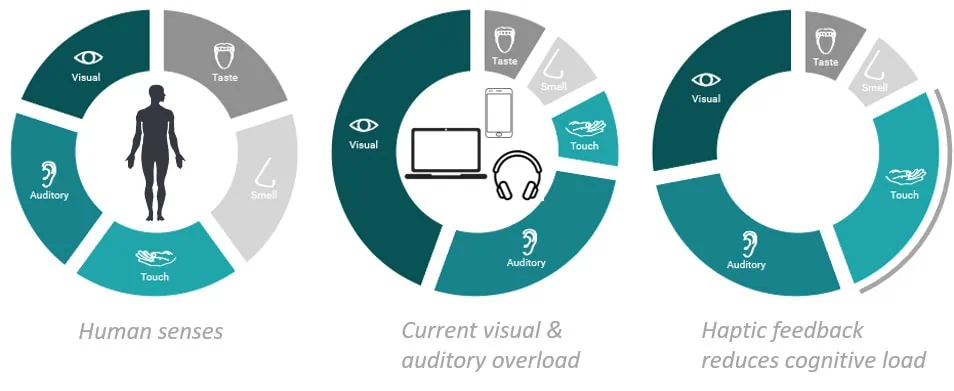
Combining visual and tactile signals communicates risk more effectively than visual information alone. A tap can never be missed the way a visual alert can.
This is what makes haptic navigation so different from a screen or a voice prompt. Instead of translating an instruction into action, the user’s body interprets the signal directly, the same way it already interprets balance, posture and movement.
Check out our BalanceBelt and FysioPal projects for reference.
Let's talk!

Improves situational awareness
In environments where vision and hearing are compromised or already overloaded, haptic feedback becomes a direct channel to the body’s spatial awareness. We’ve applied this across some of the most demanding situational awareness challenges that exist.
For the Mission Navigation Belt, developed with the Dutch Ministry of Defence, dismounted soldiers receive silent, screen-free directional guidance through haptic signals alone, keeping their hands, eyes and ears free for the mission itself.
For pilot training, we developed a haptic suit that communicates orientation during white-out and brown-out conditions, where pilots temporarily lose all visual reference. In these moments, haptic feedback can be the only reliable channel left to communicate critical spatial information.
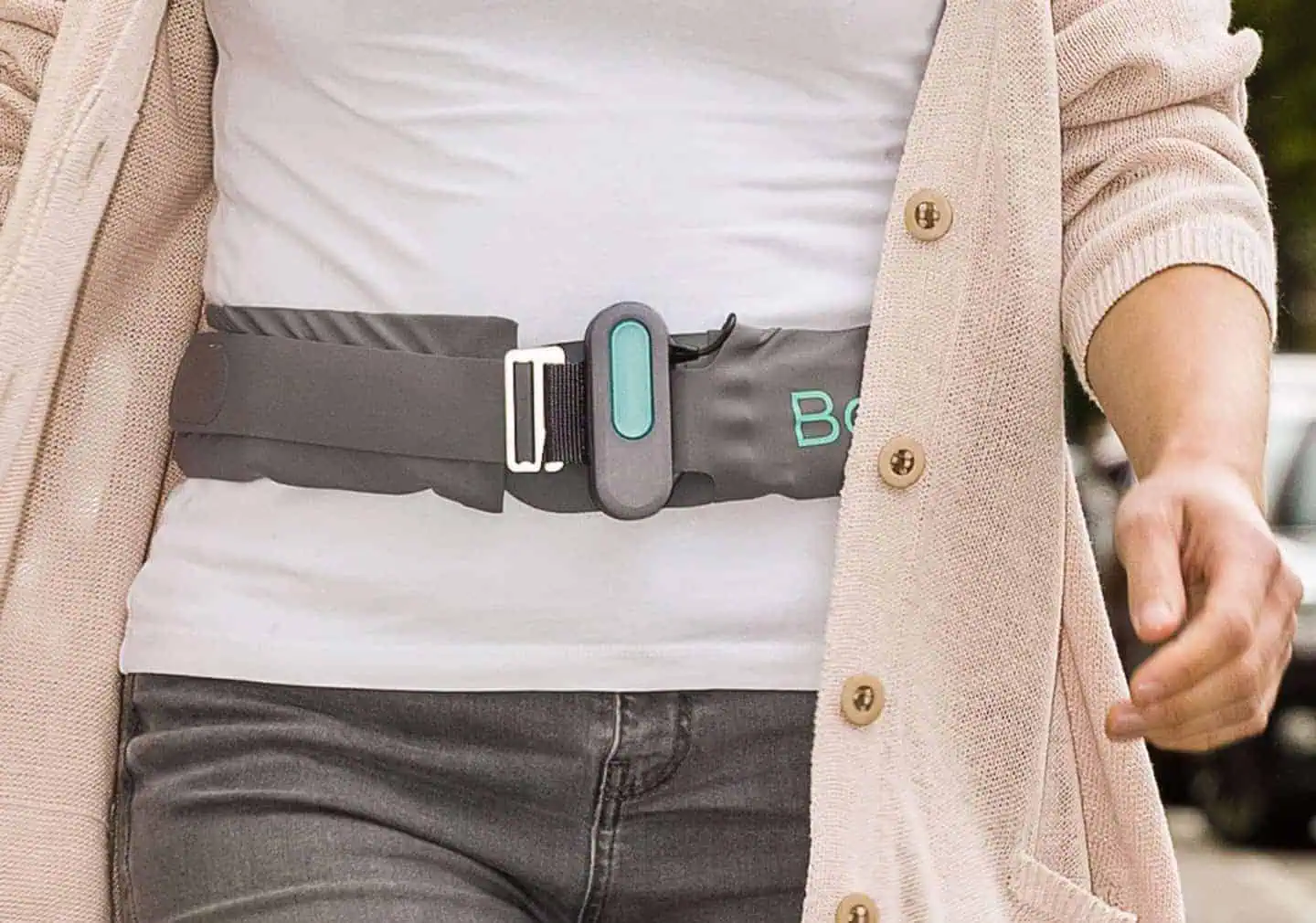
BalanceBelt

Elitac-Wearables–NeuroShirt-front

FysioPal-gallery

emo-sleeve

Cycling Shirt

Waypoint navigation
Our experience: 60+ years, four domains
Our team has over 60 years of combined experience developing haptic feedback wearables, across health & medical, defence, safety and sports, in belts, vests, sleeves, shirts, pants and full suits, for a wide range of applications.
To deliver the most cost-effective haptic implementation, we consider:
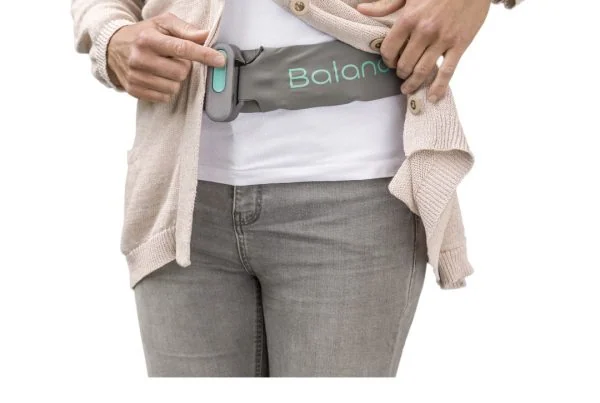


Hardware, firmware & integration
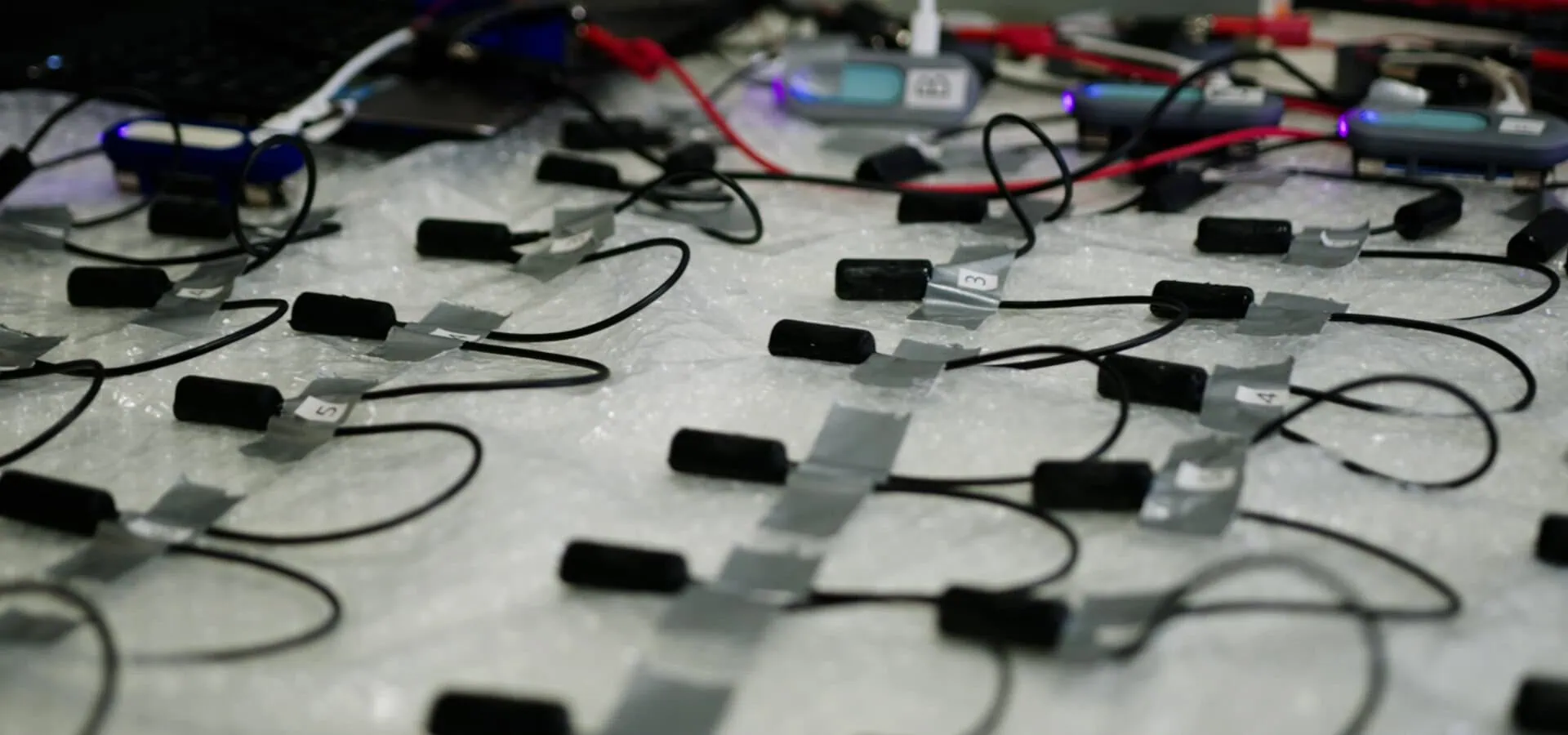
Different vibration motors (tactors) suit different applications. We’ve used and researched the most current, effective options, so we can advise on the right type and implementation for your wearable.
We balance end-user requirements, weight, cost, integration options and vibration strength to help you build the most efficient haptic wearable. Our haptic feedback building blocks let us test and refine new applications quickly, in our own Wearables Lab.
Ready to take your haptics to the next level?
Haptic interpolation: our own approach
We use haptic interpolation to build wearables that are more efficient, lighter and cheaper to manufacture. This technique lets us generate the sensation of vibration anywhere within an area covered by a set of motors, not only directly under a single tactor.
Learn more about haptic interpolation here.


Human factors & vibration patterns
We combine scientific research with our own field experience to advise on:
- How and where to position vibration motors in the constellation (formation)
- Which patterns are most intuitive and effective: long or short strokes, taps, frequency
Backed by research, not guesswork
Contact us or consult these scholarly articles to learn more about haptic feedback technology:
- Van Erp, J. B. F., & Self, B. P. (2008). Tactile Displays for Orientation, Navigation and Communication in Air, Sea and Land Environments (Les systemes d’affichage tactiles pour l’orientation, la navigation (RTO-TR-HFM-122). http://oai.dtic.mil/oai/oai?verb=getRecord&metadataPrefix=html&identifier=ADA492500
- Escamilla-Nunez, R., Michelini, A., & Andrysek, J. (2020). Biofeedback Systems for Gait Rehabilitation of Individuals with Lower-Limb Amputation: A Systematic Review. Sensors, 20(6). https://doi.org/10.3390/s20061628
- Gilson, R. D., Redden, E. S., & Elliott, L. R. (2007). Remote tactile displays for future soldiers (ARL-SR-0152).
- Huisman, G. (2017). Social Touch Technology – Extending the reach of social touch through haptic technology [University of Twente]. https://doi.org/10.3990/1.9789036543095
- Israr, A., & Poupyrev, I. (2011, May). Tactile Brush : Drawing on Skin with a Tactile Grid Display. CHI 2011
Tell us about your haptic project
Contact us to find out how we can help you to getting wearables in production with efficient and cost-effective haptic feedback.
The benefits of haptic feedback
wearables summarised

Reduced sensory overload
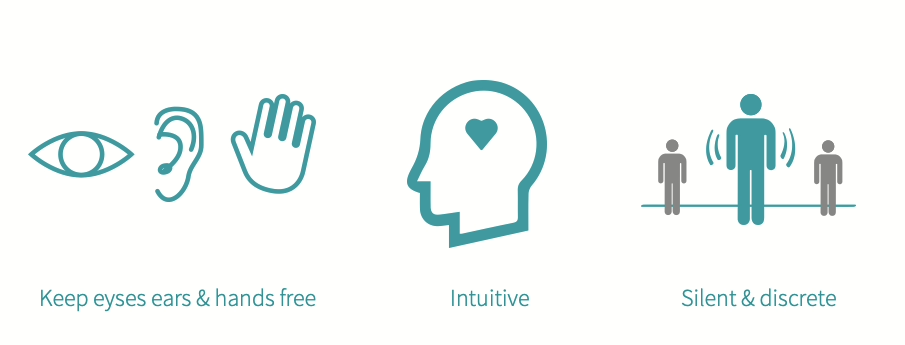
By addressing the under used sense of touch, the eyes and ears (vision and sight) remain free for other tasks.
Directional information
Research has shown that haptic feedback wearables are very effective at indicating directional information from a user-centred point of view.
Sensory replacement and augmentation
Wearable haptic devices can replace or augment (partially) impaired senses for a variety of applications.
Intuitive
Haptic feedback has proven to be very intuitive & direct, especially for navigation or directional purposes, even in 3D (distance).
Effective risk communication
Combining visual and tactile information can be more effective than visual information alone in the communication of risks.
Distinct
A haptic feedback wearable can always be felt: In the case of auditory and visual overload, users are still aware of “the tap on the shoulder”.
ERMs versus LRAs
Among the most common types of actuators used in wearable haptic devices are Piezo actuators, Eccentric Rotating Mass (ERM) motors, and Linear Resonant Actuators (LRAs). Each of these technologies offers specific advantages, making them suitable for different applications.

An exploded view of a cilindrical or ‘pill-shaped’ ERM by Precision Microdrives (Image courtesy of Precision Microdrives)

An exploded view of a coin-style LRA, by Precision Microdrives (Image Courtesy of Precision Microdrives)
Key Technologies Behind Haptic Feedback Wearables
Here’s a breakdown of the main technologies powering haptic feedback wearables:
1. Vibration Motors
- Eccentric Rotating Mass (ERM) Motors: ERM motors are widely used in many haptic wearable devices, such as fitness trackers and smartwatches. They create vibrations by spinning an off-centre weight, producing a simple, familiar vibration that users can feel.
- Linear Resonant Actuators (LRAs): LRAs offer more precise (direct or ‘snappy’) and consistent vibrations compared to ERMs. These actuators use a magnetic mass that moves back and forth within a coil, making them ideal for haptic feedback where more controlled and refined vibrations are necessary.
2. Piezoelectric Actuators
- Piezo actuators are known for their precision and rapid response, making them a go-to technology for wearables that need high-frequency, sharp feedback. These actuators work by expanding or contracting in response to electrical signals, producing subtle, detailed vibrations perfect for intricate haptic feedback.
3. TENS (Transcutaneous Electrical Nerve Stimulation)
- TENS technology is used in some wearables to create a tingling sensation by delivering electrical impulses to the surface of the skin through electrodes. While primarily used for pain relief, this technology is also integrated into haptic feedback wearables to provide varied tactile experiences, such as feeling rain drops, slight pressure or touch. .
4. EMS (Electrical Muscle Stimulation)
- EMS technology stimulates muscles directly through electrodes for wearables, placed on the skin, and giving electrical impulses, causing the muscles to contract. This can be used in haptic feedback to simulate more intense sensations, such as muscle movement, or ‘impact’, adding another layer to the tactile experience.
5. Ultrasonic Haptics
- Ultrasonic haptics is an upcoming technology that uses high-frequency sound waves to create tactile sensations in ‘thin air’. This allows users to feel vibrations or textures without direct contact, offering a futuristic approach to haptic feedback in devices, human machine interaction and virtual reality for example.
6. Electro vibration
- Electro vibration technology changes the friction between a user’s finger and a touch surface through electrical signals, creating the sensation of texture. This haptic technology can be used in devices to simulate different material surfaces ( e.g. simulating a texture on the surface of a phone screen), enhancing the user experience.
7. Thermal Haptics
- Thermal stimulation is another technique used in haptic feedback wearables, providing sensations of warmth or coolness. Although not vibration-based, combining thermal haptics with other feedback technologies can significantly enhance the immersive experience.
Each of these technologies plays a critical role in delivering the dynamic and responsive touch experiences that define modern haptic feedback wearables. By carefully selecting and integrating these technologies, developers can create wearables that offer not just functionality, but a truly engaging tactile experience for users.
Ready to take your haptic wearable to the next level? Contact us
Choosing the right haptic technology
Selecting the appropriate haptic technology for wearable devices depends largely on the specific needs of the application.
However, equally important is ensuring the optimal integration of hardware and firmware. This is where a wearable hardware/firmware review becomes essential, helping identify potential bottlenecks and ensuring all components work seamlessly together to deliver the best possible user experience
For delicate, low vibration power, but when a high resolution of actuators is needed (for example to experience the haptic sensation of rain drops on the skin), TENS electrodes can be considered.
In case you want to have strong, powerful (even painful) sensations, EMS could be your choice.
But in most of our projects, where we are looking at a great combination of control, robustness, ease of use and strict costs, we go for vibration motors.
- Piezo actuators offer accurate and responsive feedback, but a relatively ‘soft’ vibration and are not so durable, making them less suitable for haptic feedback wearables.
- LRAs provide both precision and robustness, yet at a larger cost. And they are not so powerful, making them a good choice for a wide range of ‘rigid’ consumer electronics, such as mobile phones, where you need only a few of them in one product.
- ERM motors on the other hand are suitable for applications where power, cost and simplicity are the primary concerns. These are our go-to option.
Frequently asked questions about developing wearable haptic devices
What is Haptic Feedback?
Haptic feedback is providing information to a user by means of vibrations or the sense of vibrations: touch.
What is a 'Haptic Constellation'?
When we talk about the Haptic Constellation, we are referring to the placement pattern or figure we locate the actuators in, relative to one and other. Just like a star-constellation.
What is an 'Actuator'?
An ‘Actuator’ is what we refer to as the component ‘giving’ or transmitting the haptic feedback (energy) to the user. These are often vibration motors, or TENS or EMS electrodes.
Where a Sensor is the component measuring something (often energy) from the user. These could also be for example electrodes, but used to measure signals, instead if giving signals.
Which haptic feedback actuators do you normally use?
At Elitac Wearables we mostly use vibration motors for our haptic feedback wearables. In particular we like to use ERM’s for their vibration power & accuracy, durability, and cost effectiveness.
However, we have experience in applying a variety of vibration motors (such as LRA’s and Piezo’s), but also TENS and EMS electrodes.
What is the difference between an LRA and an ERM?
Eccentric Rotating Mass (ERM) Motors: ERM motors are widely used in many haptic wearable devices, such as fitness trackers and smartwatches. They create vibrations by spinning an off-centre weight, producing a simple, familiar vibration that users can feel.
Linear Resonant Actuators (LRAs): LRAs offer more precise (direct or ‘snappy’) and consistent vibrations compared to ERMs. These actuators use a magnetic mass that moves back and forth within a coil, making them ideal for haptic feedback where more controlled and refined vibrations are necessary.
ERMs are more durable and cost-effective than LRAs.
How can Haptic Feedback be used in medical devices?
Haptic Feedback can be used in medical devices for several reasons. It can enable direct feedback to a user; meaning a user can get a vibration as a feedback, to for example change posture, move a limb, or get confirmation on performing a task correctly.
Another great use for Haptic Feedback in medical or supportive devices is sensory substitution; where an electronics system takes over certain lost senses and replaces them by addressing another sense. For Haptic Feedback, one addresses the sense of touch.
Can haptic feedback wearables be customised for specific industry needs?
Each industry comes with its own use case. The use case requirements specify the type of actuators and type of integration technique to use.
In some cases cost price is a driving factor, in other cases for example miniaturisation is key. Other factors to consider when choosing the right actuators are the amount of actuators, the force or power of the vibration, durability, washability, etc.
What are the future trends in haptic feedback technology?
Driven by the evolution of AR, VR and XR, we foresee a growing demand for mixed haptics; where different actuators are combined to be able to give life-like and diverse haptic experiences: from soft gentile raindrops to powerful (maybe even painful) impacts, for e.g. training simulations.
How many haptic actuators do I need in my wearable?
How many actuators you need in your wearable, strongly depends on what type of haptic experience you want to give to the user. A navigation wearable for example could do with just 2 actuators: Left and Right. But probably, you want to give a more 360 degrees feeling to the user, or even a a sphere!
Here is where interpolation becomes relevant. By using interpolation, we can create a virtual vibration in between 2 or 3 real vibrations, allowing for a stepless, smooth haptics experience.